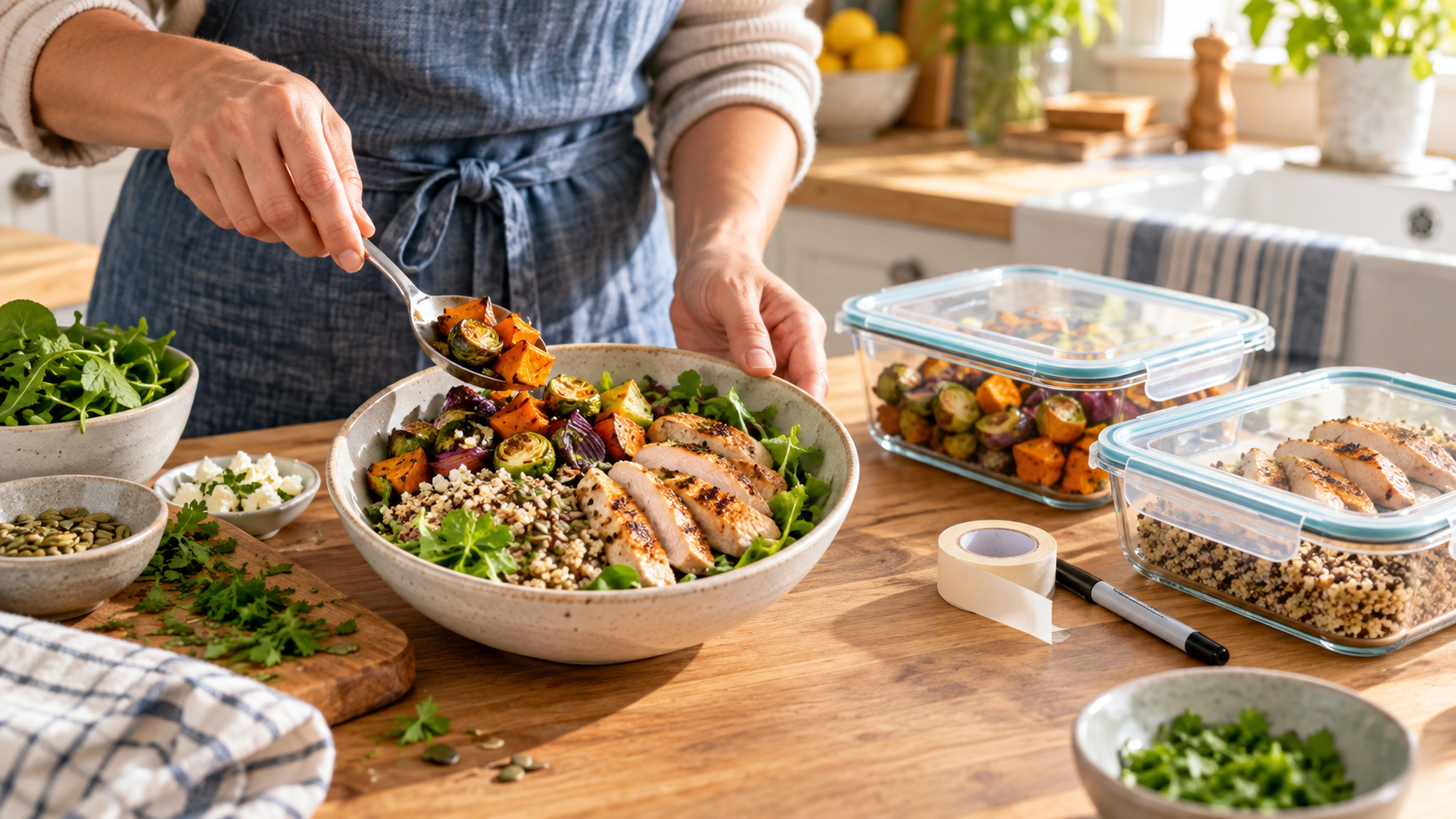
*Yesterday’s dinner can become today’s best lunch—but only if it was cooled, stored and reheated properly. A simple system can reduce food waste without turning safety into guesswork.*
Leftovers have an image problem. At one extreme, perfectly good food is thrown away because no one remembers when it was cooked. At the other, a forgotten container is opened, sniffed and declared “probably fine.” Neither approach is especially smart.
The better method begins before the food enters the refrigerator.
The two-hour rule comes first
Perishable food should generally be refrigerated within two hours of cooking or being removed from temperature control. If the surrounding temperature is above 90°F—at a picnic, for example—the limit drops to one hour. The U.S. Department of Agriculture identifies 40°F to 140°F as the “danger zone” in which bacteria can multiply rapidly.
Do not leave a large pot on the counter for hours waiting for it to become completely cold. Divide soups, stews and other large quantities into shallow containers so they cool more quickly. Hot food can go directly into the refrigerator in smaller portions.
Keep the refrigerator at 40°F or below. An inexpensive appliance thermometer is more reliable than assuming the control dial is accurate.
Label the container, not your memory
Write the name of the dish and the date on a piece of tape. Arrange the refrigerator so older items remain visible. A designated “eat first” area prevents leftovers from disappearing behind new groceries.
USDA guidance says most cooked leftovers can be refrigerated for three to four days. Freeze them if they will not be eaten within that period. Frozen leftovers remain safe for a long time when continuously frozen, although quality declines over time; USDA suggests three to four months as a quality window for many leftovers.
One important correction to popular wisdom: smell cannot confirm that food is safe. Disease-causing bacteria may be present without changing a food’s taste, appearance or odor. If a perishable dish sat out too long or its storage history is uncertain, tasting it is not a safety test. Discard it.
Reheat with a destination in mind
Leftovers should reach 165°F when reheated. Sauces, soups and gravies should be brought to a rolling boil. In a microwave, cover the food, rotate or stir it for even heating and check more than one spot because microwaves can leave cold areas.
Instead of reheating the entire container several times, remove only the portion you plan to eat. That protects quality and makes the process easier.
Make the second meal intentionally different
Food is more appealing when it feels like a new dish rather than a diminished repeat. Turn roasted vegetables into a frittata, grain bowl or blended soup. Slice cooked chicken into tacos or a salad. Use cooked rice in fried rice—provided it was cooled and stored promptly. Transform bread into croutons or breadcrumbs before it spoils.
Keep “bridge ingredients” on hand: eggs, tortillas, broth, greens, plain yogurt, lemons and a few sauces or spice blends. These flexible staples can connect unrelated leftovers into a coherent meal.
Before ordering takeout or beginning a new recipe, scan the eat-first area. The most economical dinner may already be cooked.
Leftovers are not merely scraps. Handled properly, they are prepaid ingredients—saving time, stretching a food budget and reducing waste one container at a time.
**Practical takeaway:** Refrigerate promptly, date every container, use refrigerated leftovers within three to four days, and reheat them to 165°F.
**Sources:** [USDA: Leftovers and Food Safety](https://www.fsis.usda.gov/food-safety/safe-food-handling-and-preparation/food-safety-basics/leftovers-and-food-safety); [USDA: Refrigeration and Food Safety](https://www.fsis.usda.gov/food-safety/safe-food-handling-and-preparation/food-safety-basics/refrigeration)