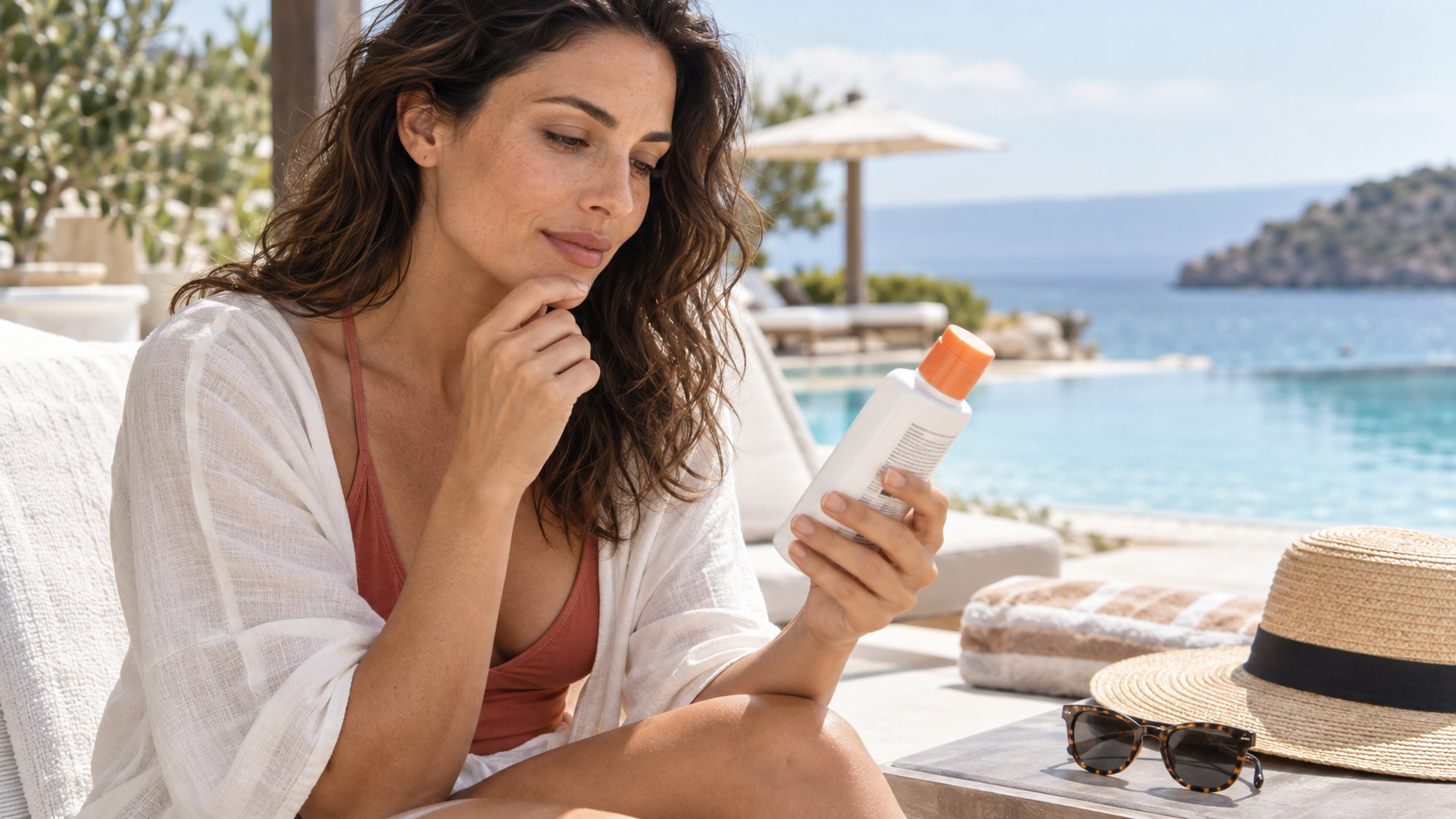
*The front of a sunscreen bottle contains only a few words, but those words do different jobs. Knowing what they mean makes it easier to choose—and correctly use—sun protection.*
Sunscreen shopping can feel like decoding a chemistry lesson. Mineral or chemical? SPF 30 or 100? Sport, face, sheer, matte or hydrating? The most useful approach is to begin with three regulated label terms: SPF, broad spectrum and water resistance.
SPF mainly describes UVB protection
SPF stands for sun protection factor. It measures protection from ultraviolet B radiation, the type strongly associated with sunburn. The number does not tell you how many hours you can safely remain outside, and a higher SPF does not eliminate the need to reapply.
The American Academy of Dermatology recommends a broad-spectrum, water-resistant sunscreen with SPF 30 or higher. SPF 30 is not an invitation to use less product; sunscreen must be applied adequately and evenly to deliver the protection described on the label.
“Broad spectrum” covers another part of the problem
The sun emits both UVA and UVB radiation that reach the skin. UVA contributes to premature skin aging, while both UVA and UVB can contribute to skin cancer. A sunscreen labeled “broad spectrum” has passed testing for protection across both portions of the ultraviolet spectrum.
That means SPF alone is not the entire story. When comparing two products, look for “broad spectrum” as well as the SPF number.
“Waterproof” sunscreen does not exist
In the United States, sunscreen cannot truthfully be labeled waterproof. Products may be labeled water resistant for either 40 or 80 minutes, based on testing. That number refers to time spent swimming or sweating—not total wear time.
The American Academy of Dermatology advises reapplying sunscreen about every two hours when outdoors and after swimming, sweating or toweling off, following the product’s 40- or 80-minute water-resistance directions.
Application is where protection often breaks down
Apply sunscreen to dry skin before going outdoors, and cover commonly missed areas: ears, hairline, neck, tops of feet and backs of hands. Lips need an SPF lip balm. Scalp protection may require sunscreen, a hat or both, particularly where hair is thin or parted.
Sunscreen is only one layer of sun protection. Shade, tightly woven clothing, a wide-brimmed hat and UV-protective sunglasses reduce direct exposure. No sunscreen creates an invisible shield that makes unlimited sun exposure risk-free.
Choose the product you will actually use
The best formula is one that meets the protection criteria and feels acceptable enough to apply generously. Fragrance, finish, tint and texture are personal choices. People with sensitive skin may prefer products containing zinc oxide or titanium dioxide, while tinted mineral sunscreens can help reduce the visible cast some formulas leave on deeper skin tones.
If a product stings, pills under makeup or feels unpleasant, try another formulation rather than giving up on sunscreen altogether. A daily facial lotion and a separate water-resistant body sunscreen may be more practical than expecting one bottle to suit every situation.
Finally, check the expiration date and storage instructions. Excessive heat can affect a product, so a bottle that has spent months in a hot car is not ideal.
The beauty aisle may keep inventing new language, but reliable sun protection rests on a short checklist: broad spectrum, SPF 30 or higher, water resistance when needed, sufficient application and timely reapplication.
**Practical takeaway:** Before buying sunscreen, find all three items on the label: “broad spectrum,” “SPF 30+” and “water resistant” for 40 or 80 minutes when swimming or sweating.
**Source:** [American Academy of Dermatology: How to Decode a Sunscreen Label](https://www.aad.org/public/everyday-care/sun-protection/shade-clothing-sunscreen/understand-sunscreen-labels)