How a quiet airfield near Greater Lake Worth helped defend Florida during World War II
Within the Greater Lake Worth area sits a small airport with three runways, no control tower and a history much larger than its footprint.
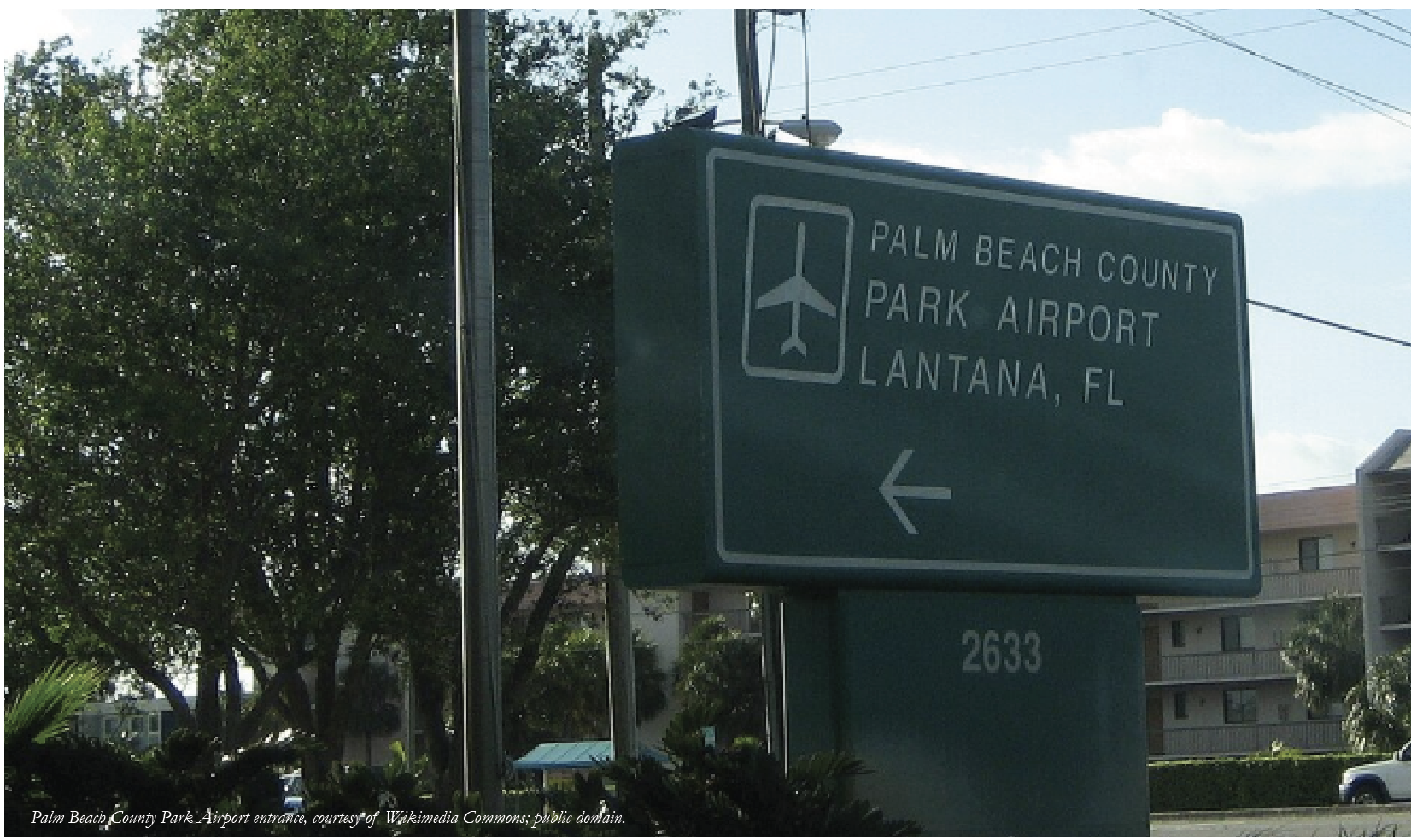
Today, Palm Beach County Park Airport—better known locally as Lantana Airport—is a familiar sight near Congress Avenue and Lantana Road. Small airplanes circle overhead, helicopters come and go, and student pilots practice takeoffs and landings. It is easy to pass the airport without realizing that more than 80 years ago, civilian pilots flew from these same grounds to search the Atlantic Ocean for German submarines.
If ever there were a “little airport that could,” this might be it.
A New Airport in an Uncertain Time
The airport was constructed in 1940 and 1941 on approximately 304 acres north of Lantana Road, between Congress Avenue and Lake Osborne.
Palm Beach County needed a second airfield because Morrison Field—[formerly Palm Beach International airport] the airport now known as President Donald J. Trump International Airport—was being converted for military use as the United States prepared for the possibility of entering World War II.
Morrison Field had opened as a commercial airport in 1936. By November 1940, the U.S. Army Air Corps had begun transforming it into a military installation. Scheduled airline service and private aircraft were relocated six miles south to the newly constructed Lantana Airport.
The first airplane landed on the new pavement in August 1941. Only a few months later, the United States entered the war following the attack on Pearl Harbor.
The quiet South Florida airfield was about to take on an extraordinary assignment.
A War Just Off Florida’s Shore
World War II did not always feel far away to Floridians.
German submarines—known as U-boats—patrolled the waters off the East Coast, attacking cargo vessels and tankers carrying fuel, food and military supplies. Ships sometimes burned close enough to Florida that residents could see smoke or flames from shore.
Coastal communities observed blackout restrictions intended to prevent the glow from homes, hotels and streets from silhouetting passing ships and making them easier targets.
The Atlantic coastline needed constant surveillance, but the military did not have enough aircraft and personnel to cover every mile. Civilian pilots and their privately owned airplanes were called upon to help.
Coastal Patrol Base No. 3
The Civil Air Patrol was formally created on December 1, 1941—six days before Pearl Harbor.
In March 1942, Coastal Patrol Base No. 3 was organized at Morrison Field with 67 members. As military activity increased there, the patrol moved to the smaller Lantana Airport.
Its members were not flying heavy military bombers. Many flew modest civilian aircraft that were better suited to carrying families or giving flying lessons than confronting enemy submarines.
Nevertheless, these pilots flew as far as 60 miles over the Atlantic, patrolling the shipping lanes between Palm Beach and Cape Canaveral. They searched for submarines, damaged vessels and sailors in distress.
The little airplanes earned the affectionate description “puddle jumpers,” but their mission was serious and dangerous. Flying small aircraft over open water presented its own risks, even before the possibility of encountering the enemy.
The Submarine on the Sandbar
One of the most remarkable episodes occurred in May 1942.
Lantana patrol members Marshall E. Rinker and Tom Manning reportedly spotted a German U-boat stranded on a sandbar near Cape Canaveral. Because their civilian airplane was not armed, they radioed for a military bomber.
Before the bomber arrived, the submarine worked itself free and escaped into deeper water.
The encounter demonstrated the limitations of sending unarmed civilian pilots to locate enemy submarines. It helped build the case for equipping Civil Air Patrol aircraft with bombs so their crews could respond immediately.
The pilots who had begun as observers soon became an armed coastal-defense force.
Eighteen Months of Service
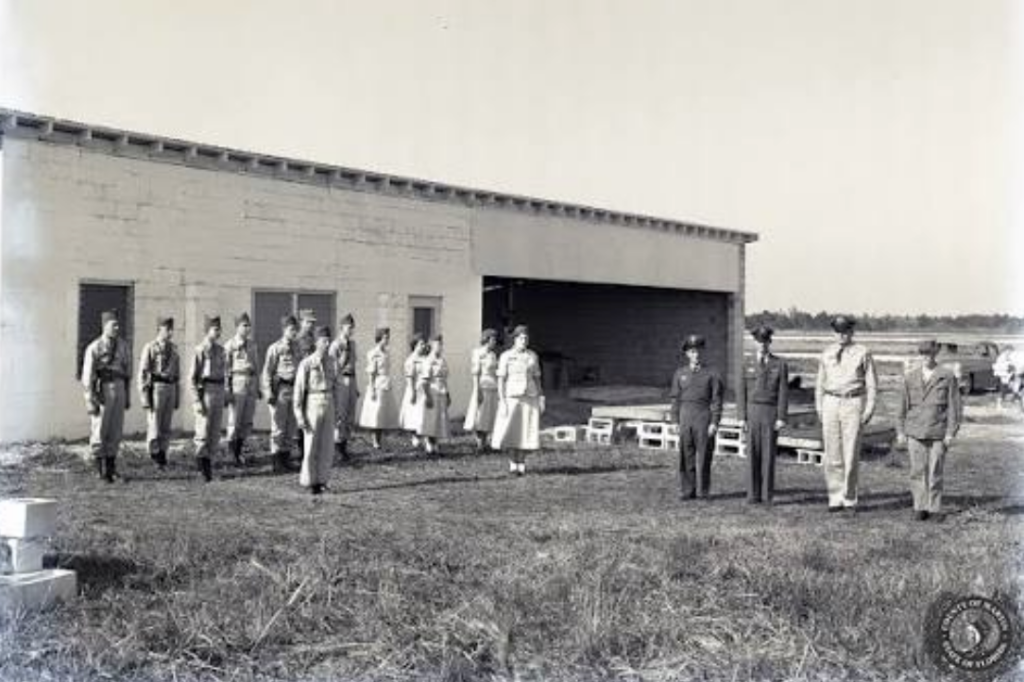
Coastal Patrol Base No. 3 operated from Lantana during 1942 and 1943.
According to the historical marker commemorating the unit, its members flew 18,712 hours and covered more than 1.5 million miles. They made 14 attacks and dropped 20 bombs on suspected German submarines.
Their work extended beyond submarine patrols. Civil Air Patrol crews reported damaged ships, directed rescue boats toward survivors and helped protect mariners traveling through dangerous waters.
The pilots flew until August 31, 1943, when the military assumed responsibility for the antisubmarine patrols.
In 1948, 53 members of the Lantana unit received the United States Air Medal in recognition of their wartime service.
From Coastal Defense to Community Aviation
Following the war, Lantana Airport returned to civilian use. It developed into a center for private aviation, flight instruction, aircraft maintenance and Civil Air Patrol activities.
Generations of local pilots have learned to fly there. Its businesses have maintained and repaired aircraft, and Civil Air Patrol members have continued participating in aviation education, emergency response and search-and-rescue missions.
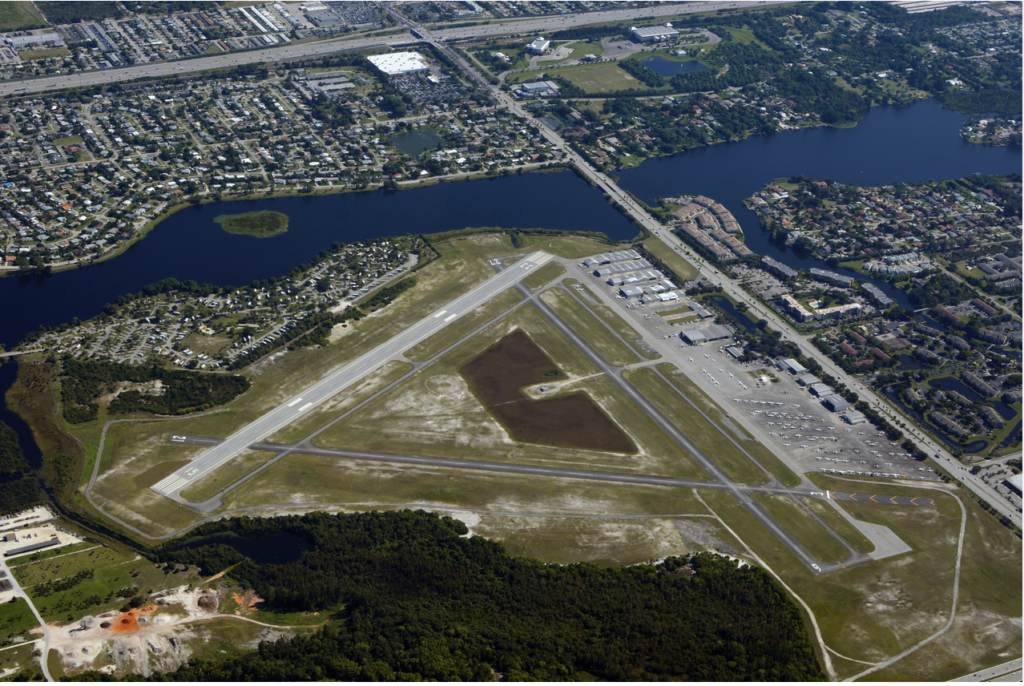
The airport’s three intersecting runways form a triangular arrangement typical of an earlier period in aviation. The layout enabled pilots to select a runway that best accommodated the direction of the wind.
Its longest runway measures only 3,489 feet—modest by modern airport standards but sufficient for many of the small airplanes that give Lantana Airport its distinctive character.
No Control Tower—But Plenty of Communication
Although it is a busy general-aviation airport, Lantana Airport does not have an air-traffic control tower.
Pilots use a common radio frequency to report their positions and intentions to one another. They announce when they are entering the traffic pattern, preparing to land, crossing a runway or departing the area.
The airport accommodates both fixed-wing aircraft and helicopters. It supports flight schools, aircraft maintenance businesses and a propeller shop. It presently charges no landing fees.
Because homes and businesses surround the property, it is considered a noise-sensitive airport. Pilots are strongly encouraged to follow voluntary procedures that reduce aircraft noise over nearby neighborhoods.
Two Airports, Two Different Missions
The names can be confusing, but the two county airports have very different roles.
President Donald J. Trump International Airport—the former Morrison Field—is the region’s major commercial airport. It carries airline passengers throughout the United States and to international destinations.
Palm Beach County Park Airport, or Lantana Airport, is the smaller general-aviation field. It primarily serves private airplanes, helicopters, flight students and aviation businesses.
Their histories have been connected since World War II. When Morrison Field was claimed for military operations, Lantana Airport gave civilian aviation a place to continue. It then became a military support field and the home of civilian coastal patrol pilots.
A Living Memorial in Our Own Backyard
Many Greater Lake Worth residents—particularly veterans and their families—understand that history is not limited to monuments, museums or distant battlefields. Sometimes it survives in ordinary places that continue performing their original purpose.
More than eight decades after its first airplane landed, Lantana Airport remains active. Pilots still learn to fly there. Mechanics still keep aircraft in the air. Civil Air Patrol traditions continue. The triangular runways remain visible from above, preserving the outline of the wartime airfield.
The next time a small airplane passes over Greater Lake Worth, it is worth remembering the pilots who once departed from Lantana with an uncertain horizon before them.
They flew small civilian aircraft over a vast ocean, watching for enemy submarines and searching for sailors who needed help.
The airport may be little, but its place in Palm Beach County history is anything but small.